The House That Diane Keaton Built
How one of Hollywood's most quietly brilliant design minds created a Beverly Hills masterclass in texture, restraint, and authentic California living — and how to bring it home.
Designed by Ralph C. Flewelling | Images via Robb Report
Located in Beverly Hills, CA
Photography by PION Studio
"I wanted a Spanish Colonial because I'm in love with California and our history. I see it in a romantic way — the twenties, indoor-outdoor living, arches, comfort." — Diane Keaton, Architectural Digest
Before she was a collector of Instagram-worthy black-and-white imagery, before the turtlenecks and tailored menswear became a cultural shorthand — Diane Keaton was quietly doing something remarkable in the hills of Los Angeles. She was buying crumbling Spanish Colonial houses, falling in love with them, and restoring them with the eye of an artist and the discipline of an architect.
Her Beverly Hills home — a 1920s Ralph C. Flewelling-designed residence in the coveted Flats neighborhood — is the jewel in that crown. Purchased in 2007 for $8.1 million and painstakingly renovated alongside designer Stephen Shadley, it's the rare celebrity home that feels earned rather than assembled. Now listed at $25 million and very much back in the cultural conversation, it's the perfect moment to decode exactly what makes this space so enduringly beautiful — and what you can steal for your own home.
Photography by PION Studio
01 / The Aesthetic - A Love Letter to California Architecture
Keaton didn't invent a style — she rediscovered one. Spanish Colonial Revival was the dominant architectural language of Southern California in the 1920s and '30s, and Keaton became one of its most passionate modern advocates. White stucco exteriors, terracotta tile roofing, wrought-iron flourishes, arched doorways and windows — these aren't merely decorative choices. They're a coherent design philosophy rooted in climate, craft, and a particular understanding of how Southern California light moves through space.
What sets Keaton's approach apart is its commitment to authenticity. Rather than applying Spanish Colonial as a surface treatment, she worked with the architecture as it was intended — preserving the original bones while updating for contemporary life. The result is a home that feels genuinely of its era without being a museum piece.
The material palette, as described by those who've walked through it, is deliberately narrow. Plaster walls in white paint. Reclaimed wood. Aged brick. Black steel. These are not luxurious materials in the conventional sense — no marble slabs, no gilded fixtures — but here they become deeply sophisticated through the quality of their selection and the care of their placement.
It's a lesson many of us overlook when thinking about interior design: restraint is not a budget constraint, it's an aesthetic choice. Choosing fewer, better materials and deploying them with intention produces spaces that read as far more refined than rooms filled with competing finishes.
02 / The Signature Elements - Six Things That DefineThe Keaton House
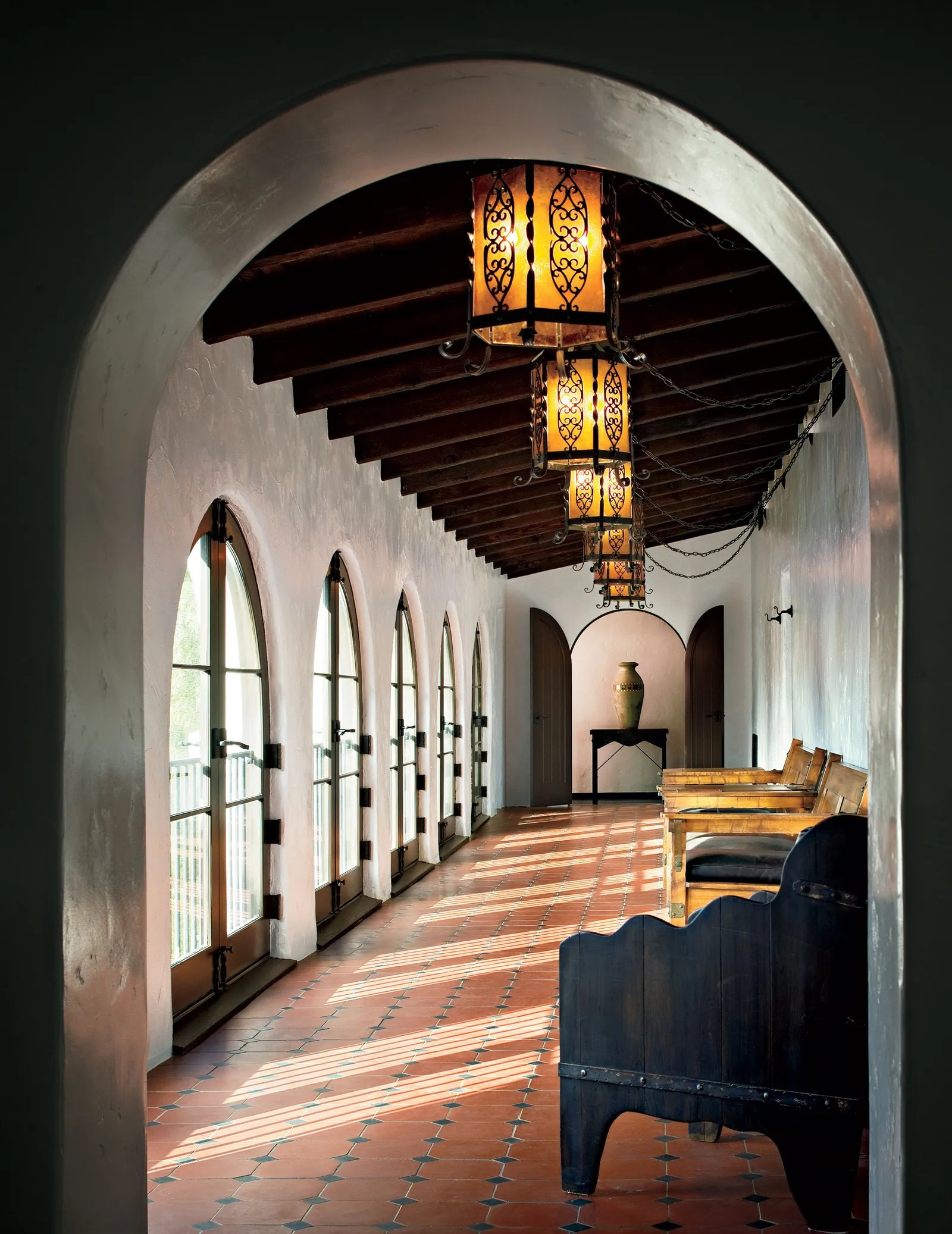
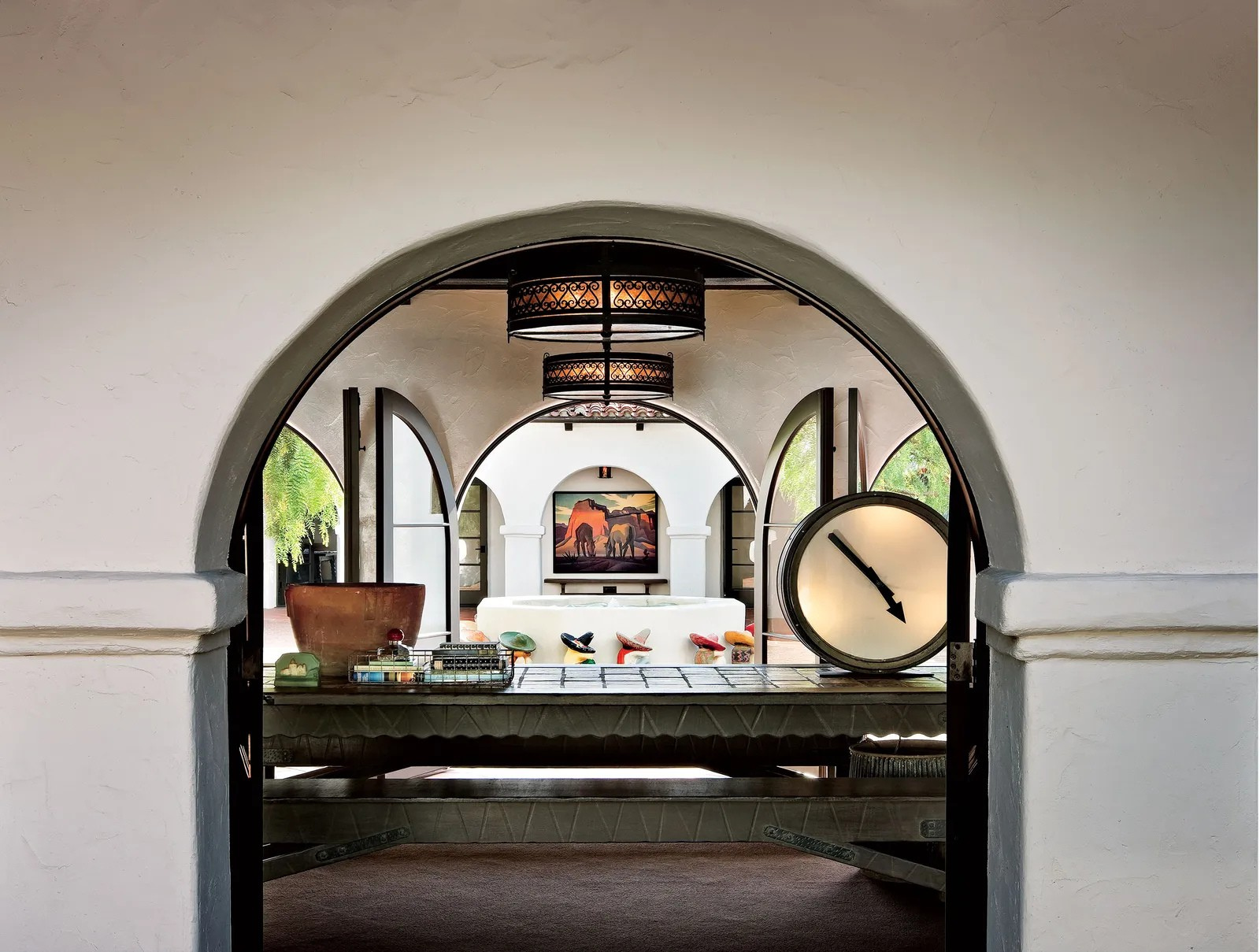
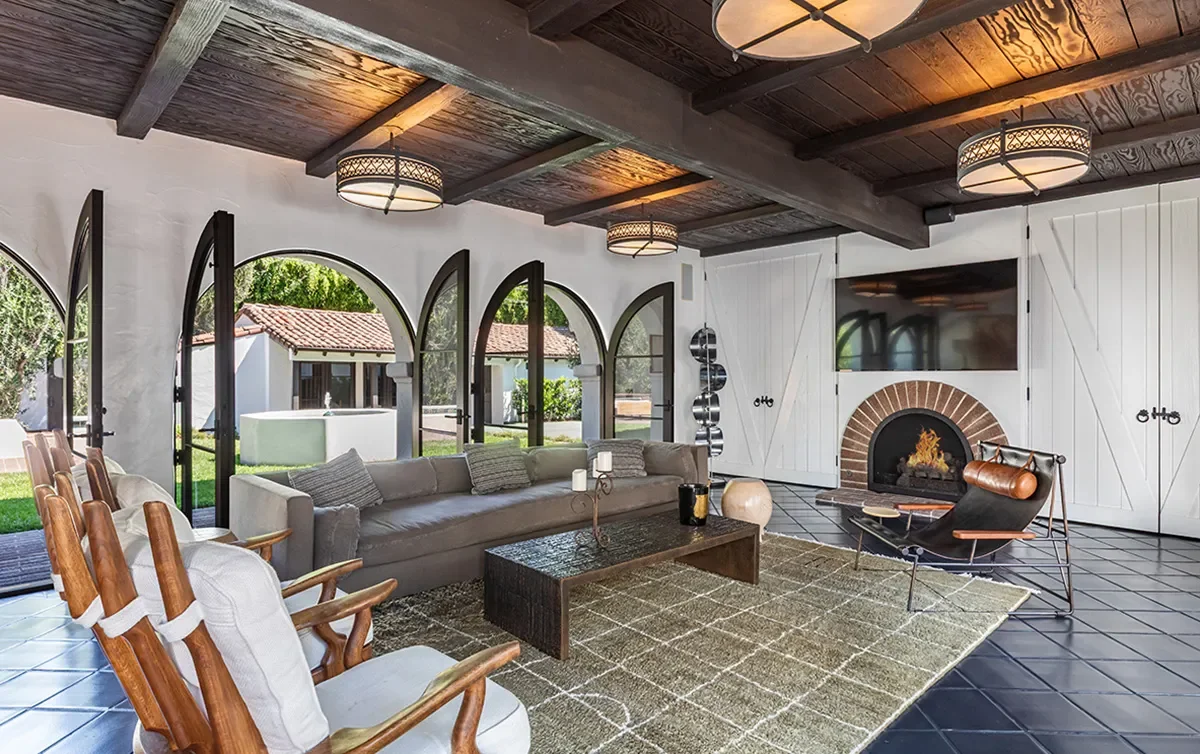
01 / The Arched Opening - Every Spanish Colonial home lives or dies by its arches. In the Keaton house, they recur throughout — framing doorways, windows, passageways into the courtyard — creating a rhythm that pulls you through the space. The arch is the signature punctuation of this style.
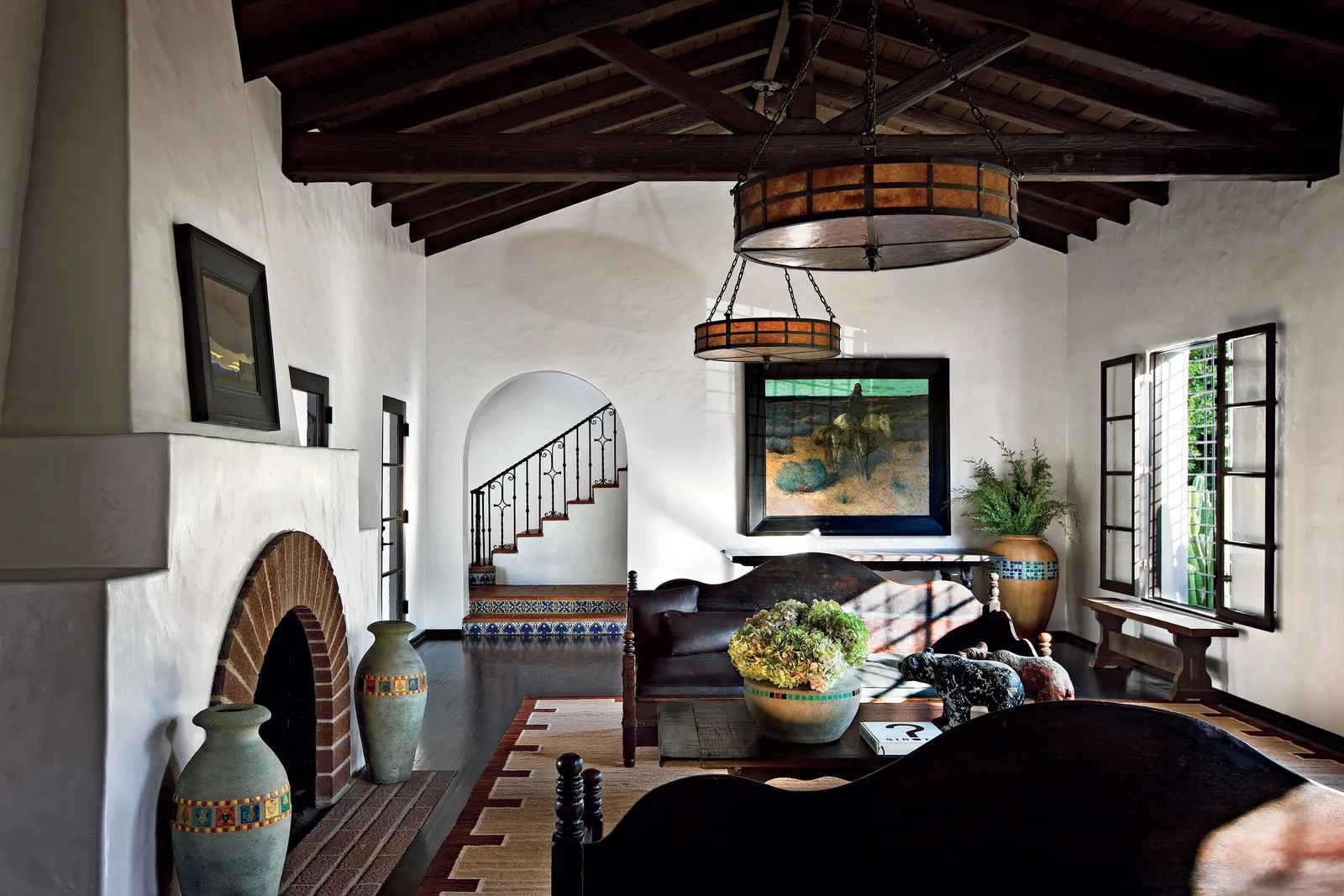
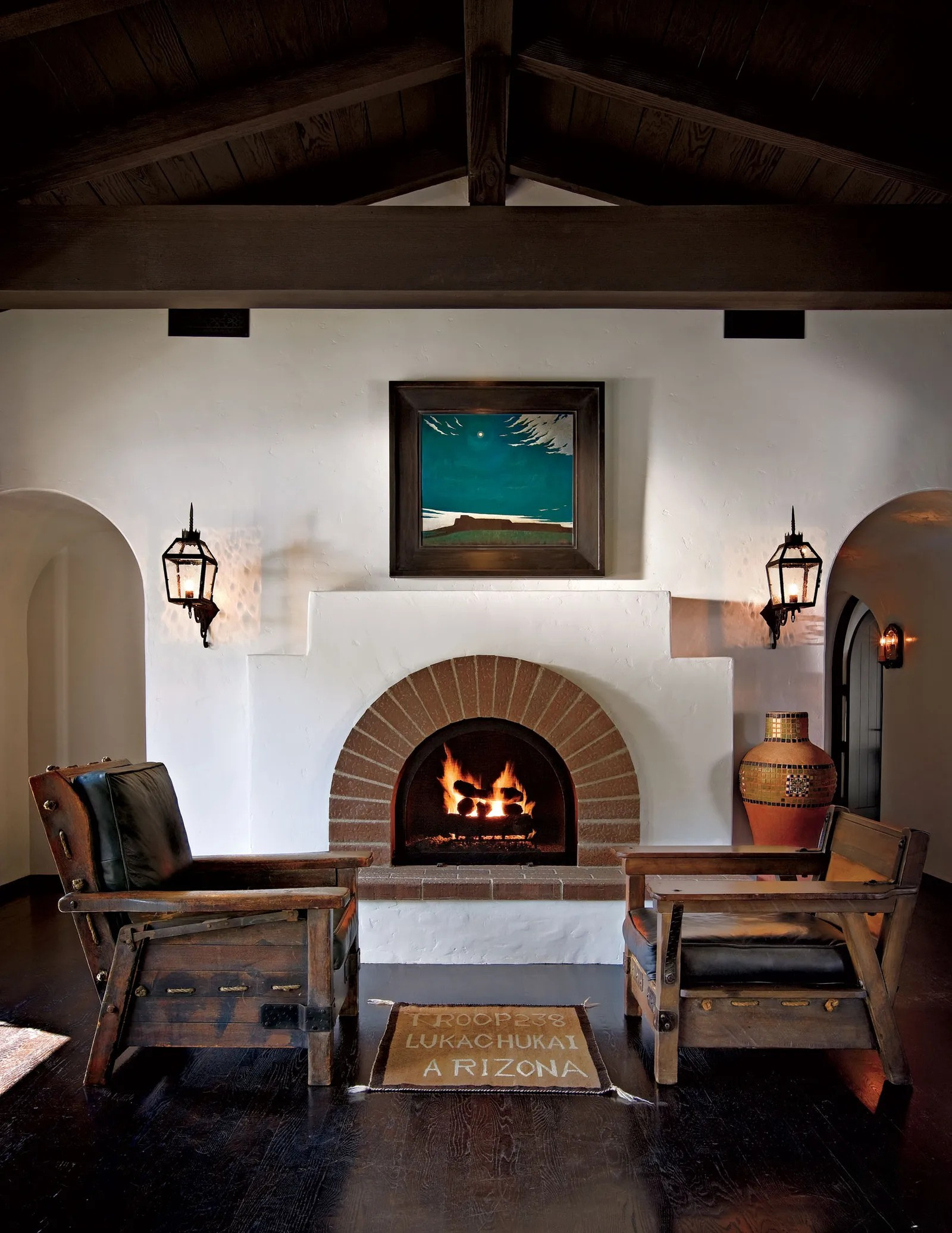
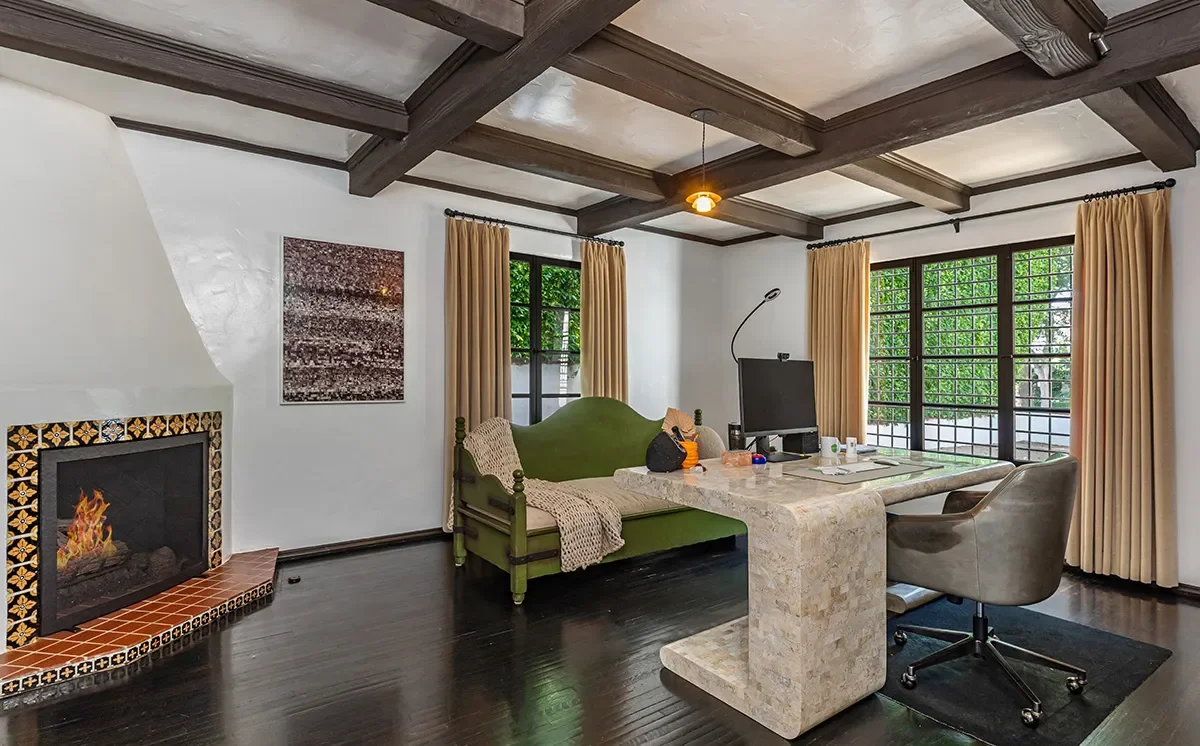
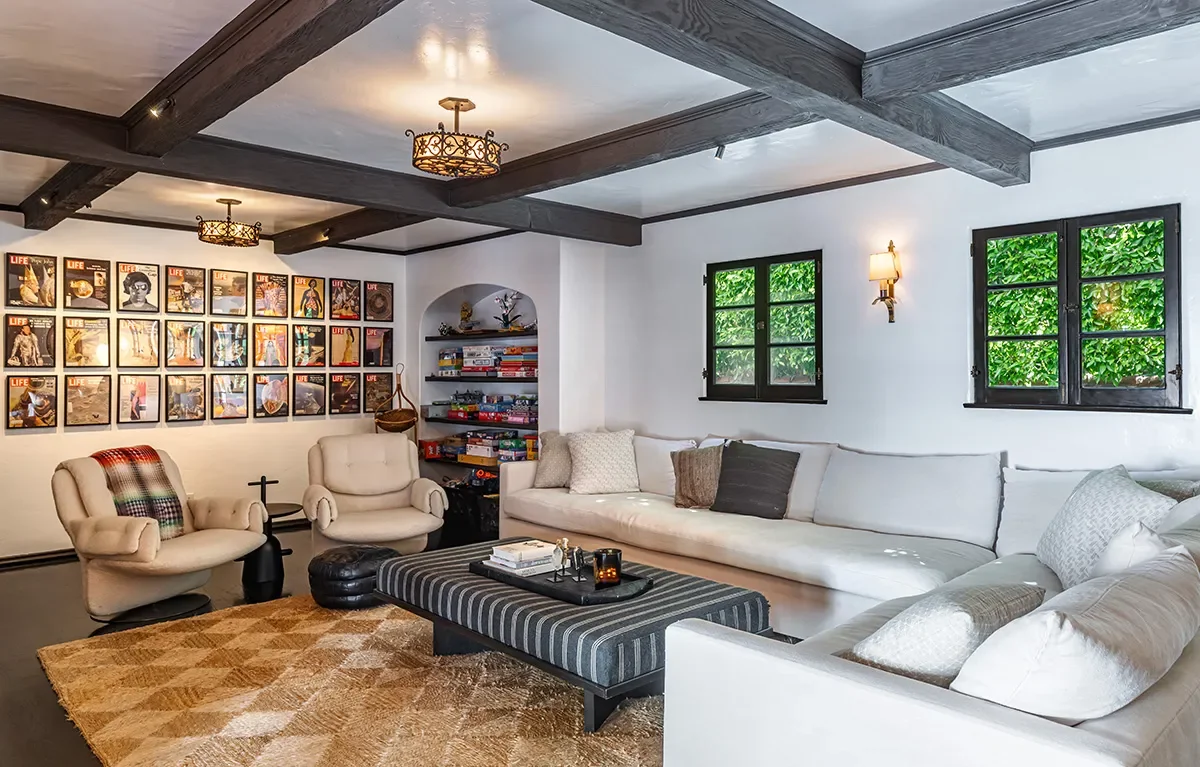
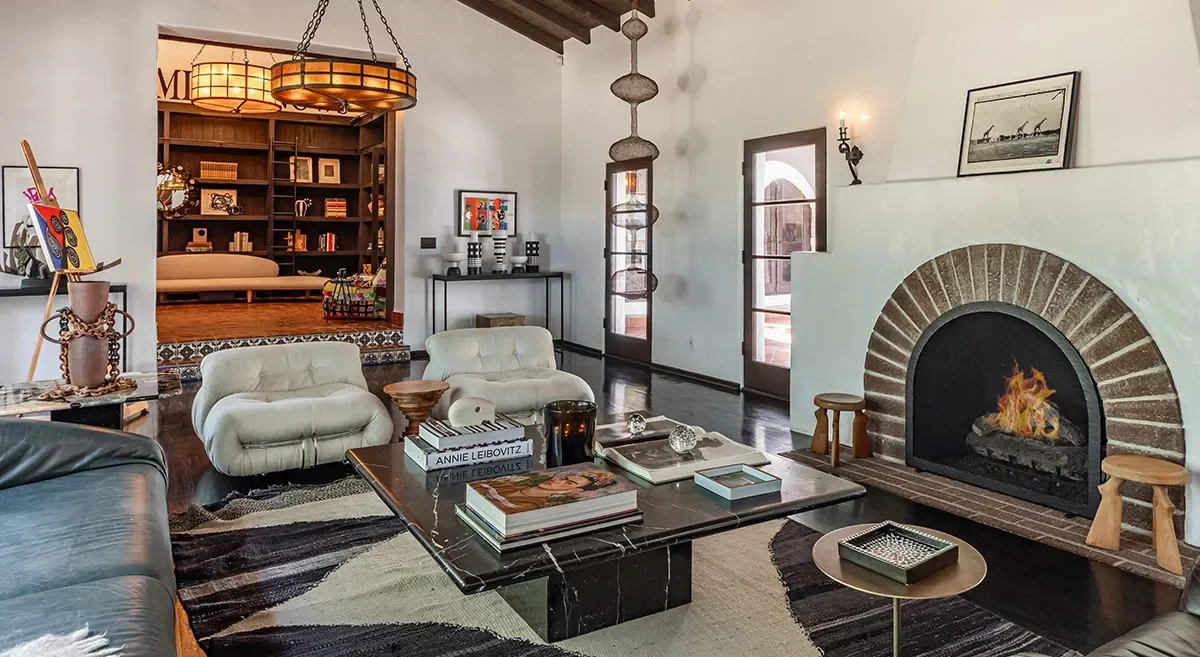
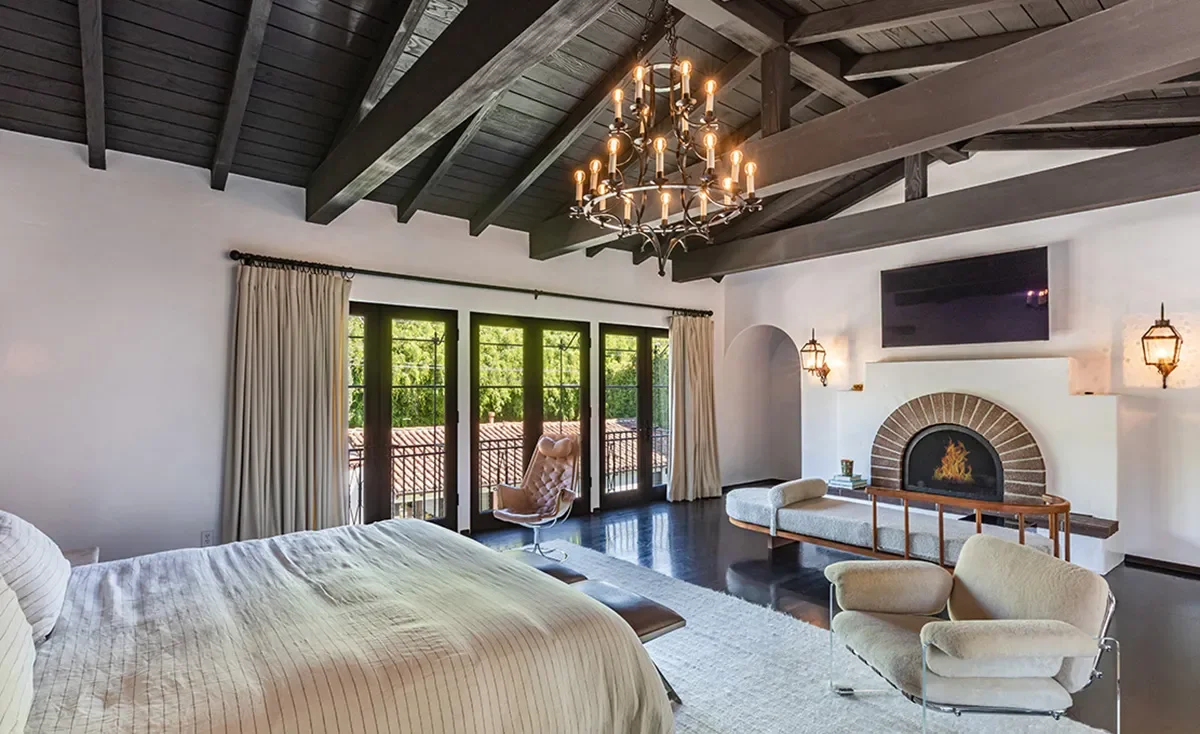
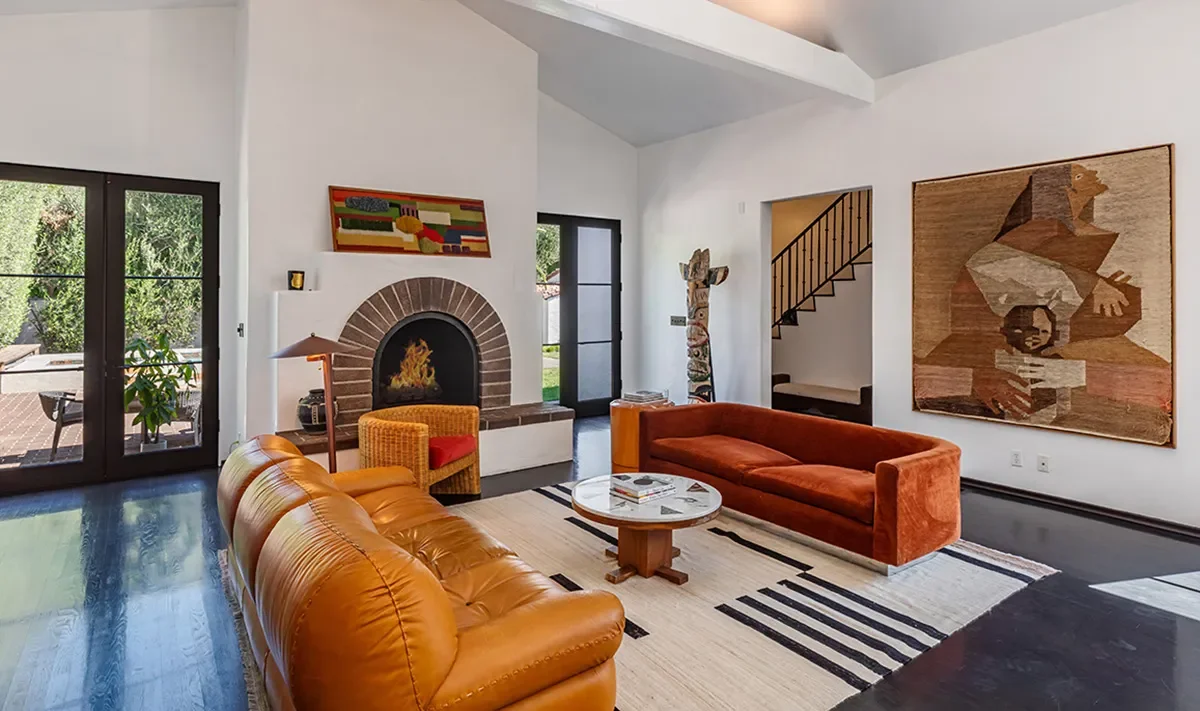
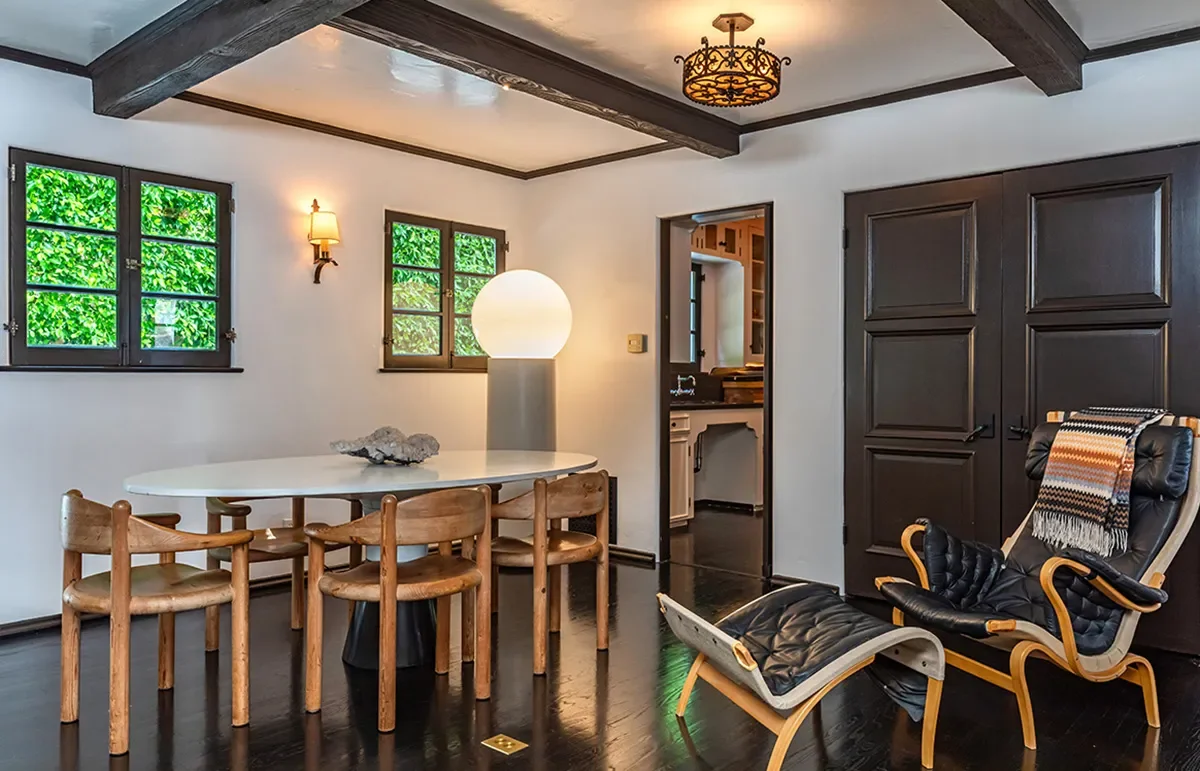
02 / Exposed Wood Beam Ceilings - The living room's soaring exposed wood-beam ceiling is one of the home's defining features. It adds warmth, height, and a sense of craft that no flat ceiling can replicate. This is an original architectural detail Keaton preserved and honoured rather than covering up.
03 / Terracotta Floors & Mosaic Tile - Hand-laid terracotta tile floors and intricate mosaic work ground the home in Southern European craft traditions. Colourful mosaic detailing at the entrance sets the tone immediately — this is a house that values the handmade.
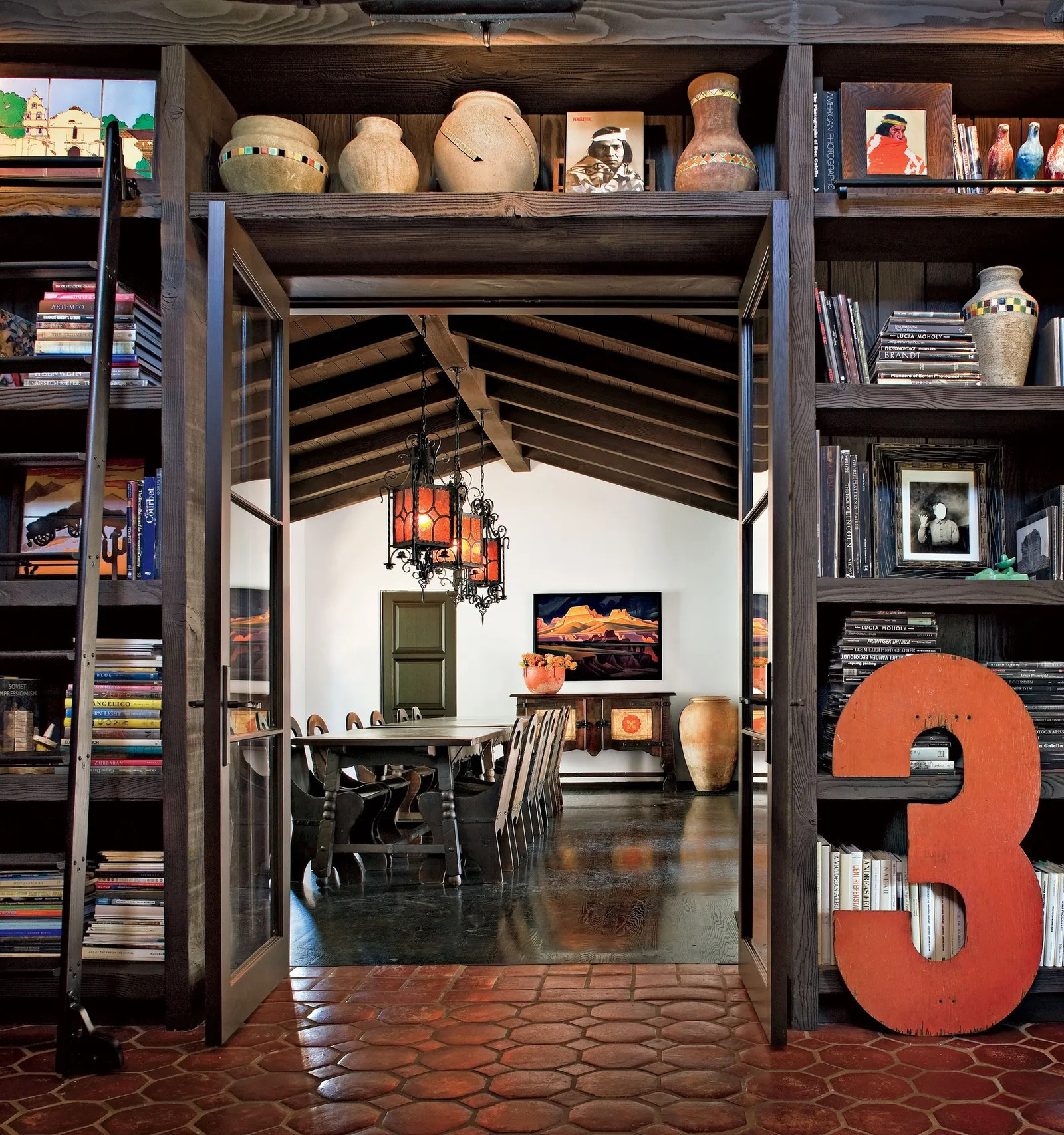
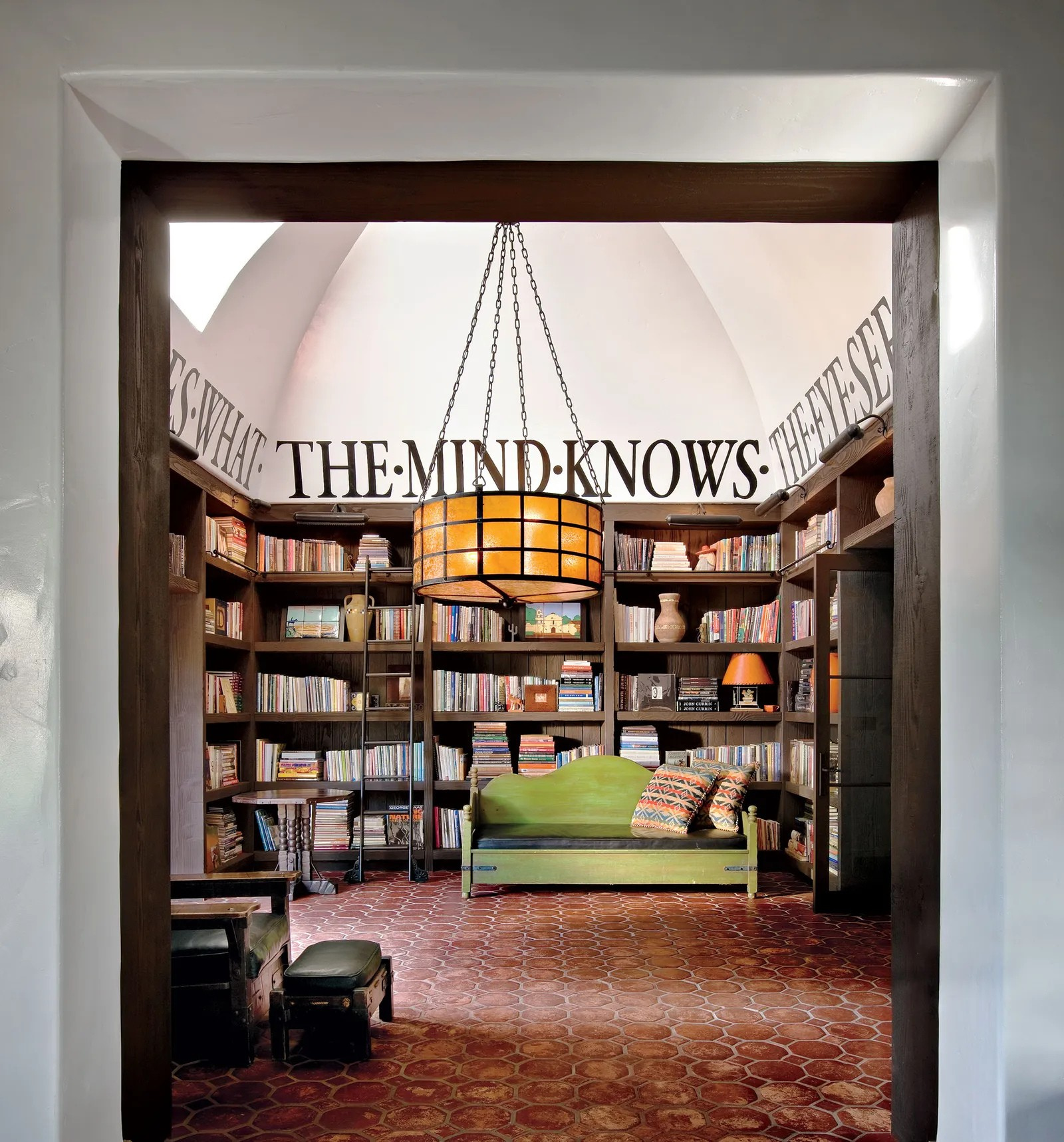
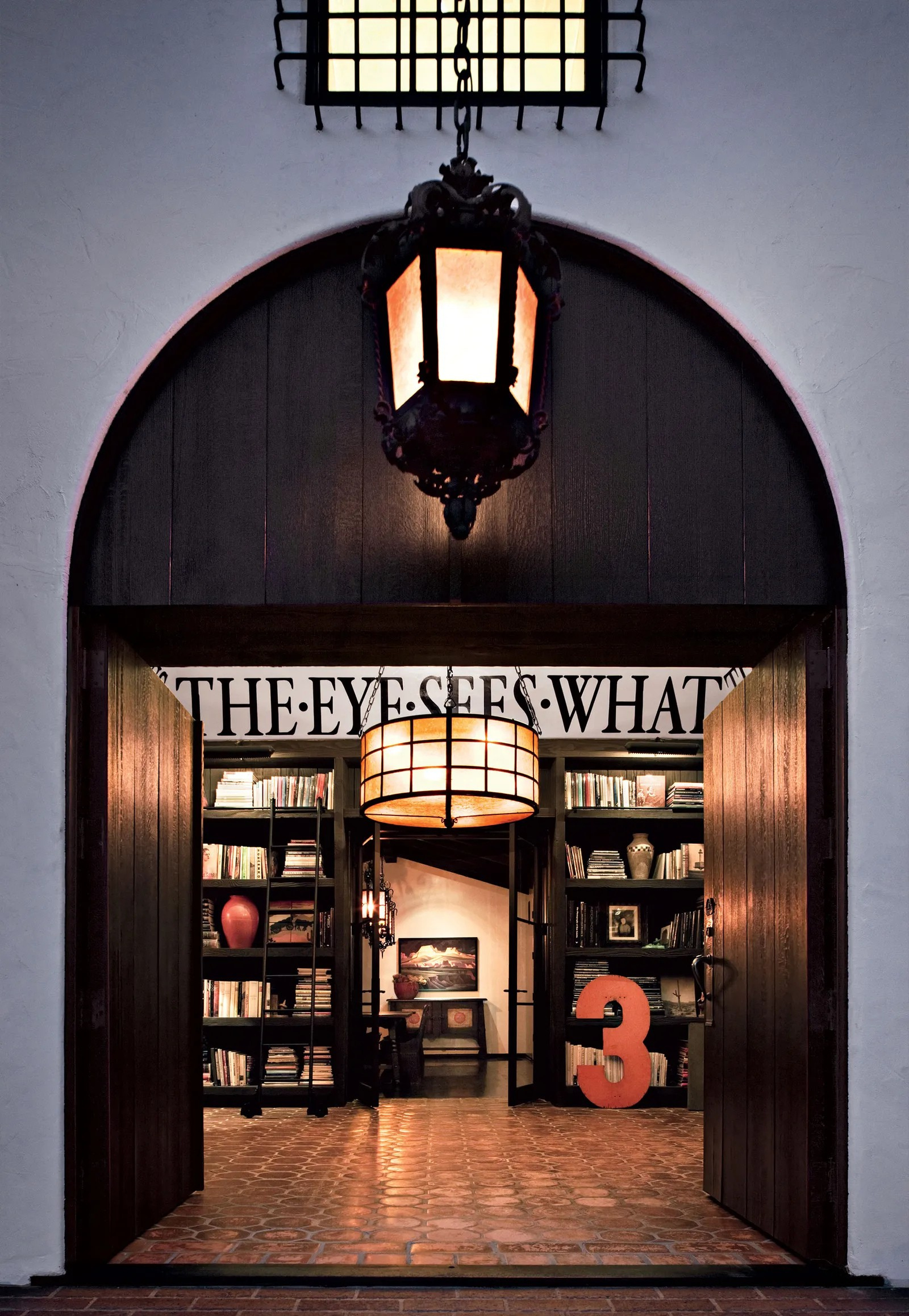
04 / The Library as Entry - In a stroke of inspired design, Keaton transformed the entry foyer into a bookshelf-lined library with a sitting area. You don't walk into a hall — you walk into a room of ideas. It signals immediately the kind of house this is: lived-in, intellectual, warm.
05 / Black Steel Windows & Doors - Large steel-framed windows and French doors are used throughout, channelling natural light deep into the interior while casting shifting shadows on textured plaster walls. The black steel reads as both industrial and refined — a perfect counterpoint to the warm, organic materials elsewhere.
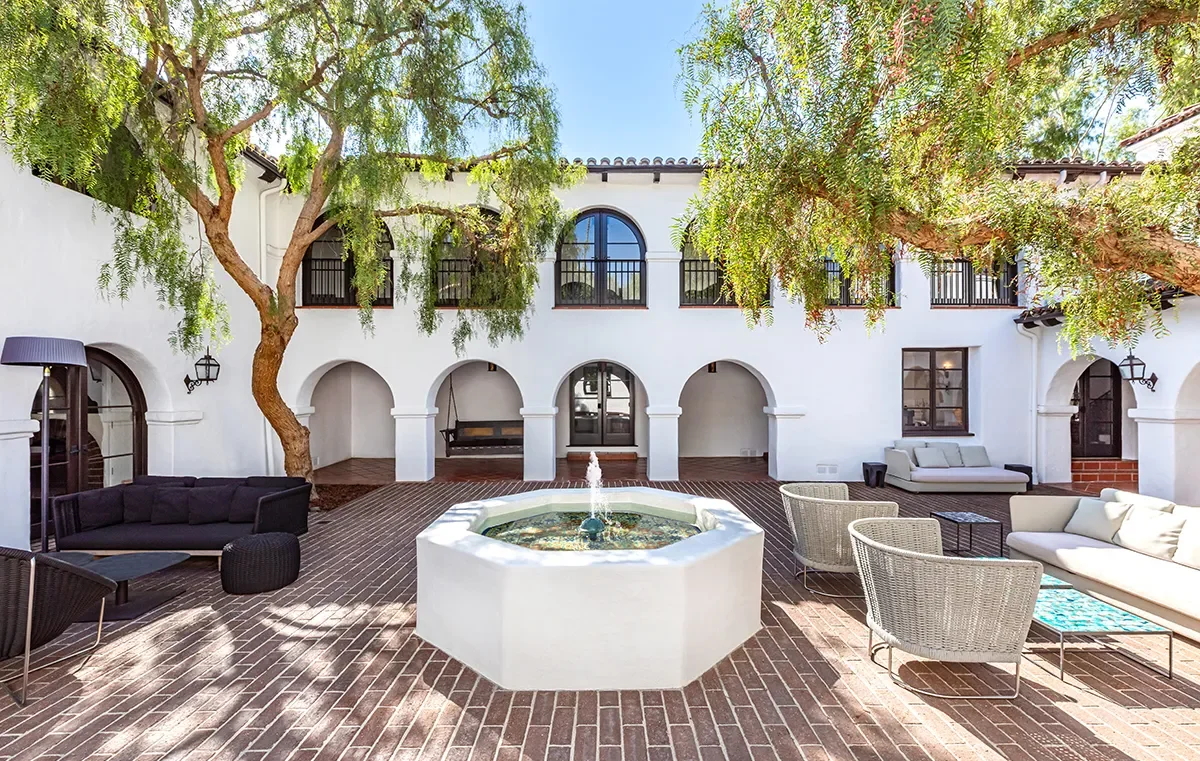
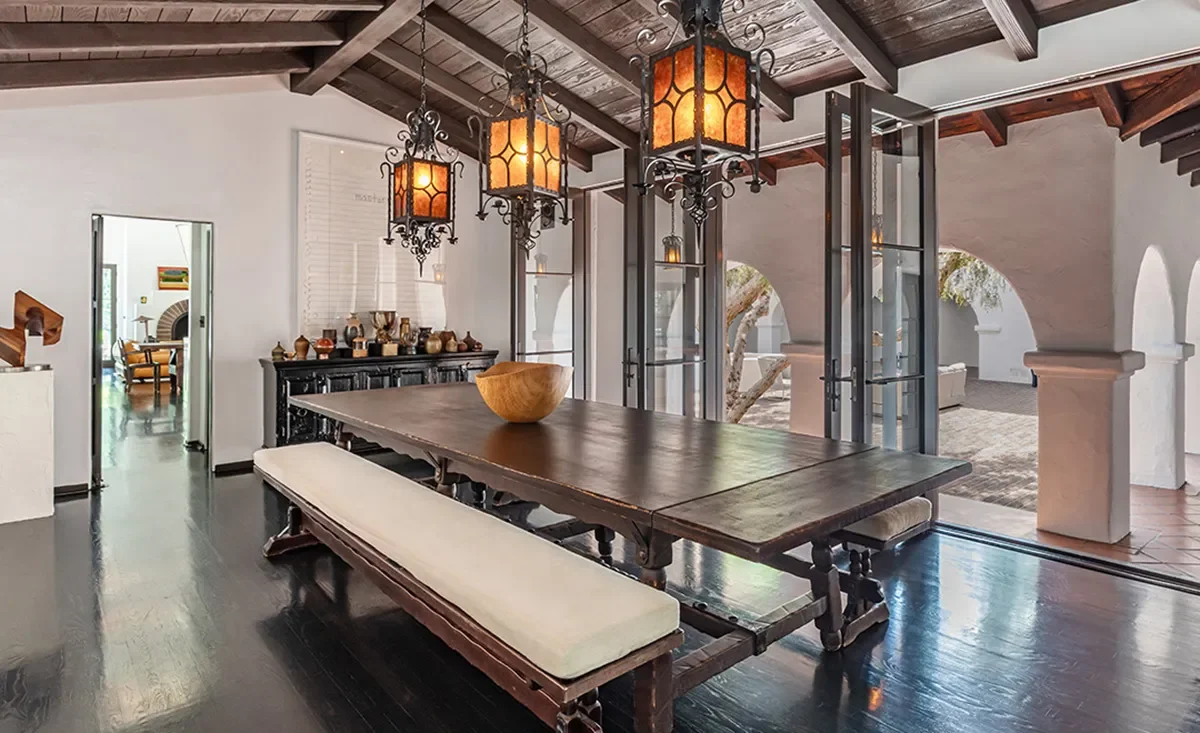
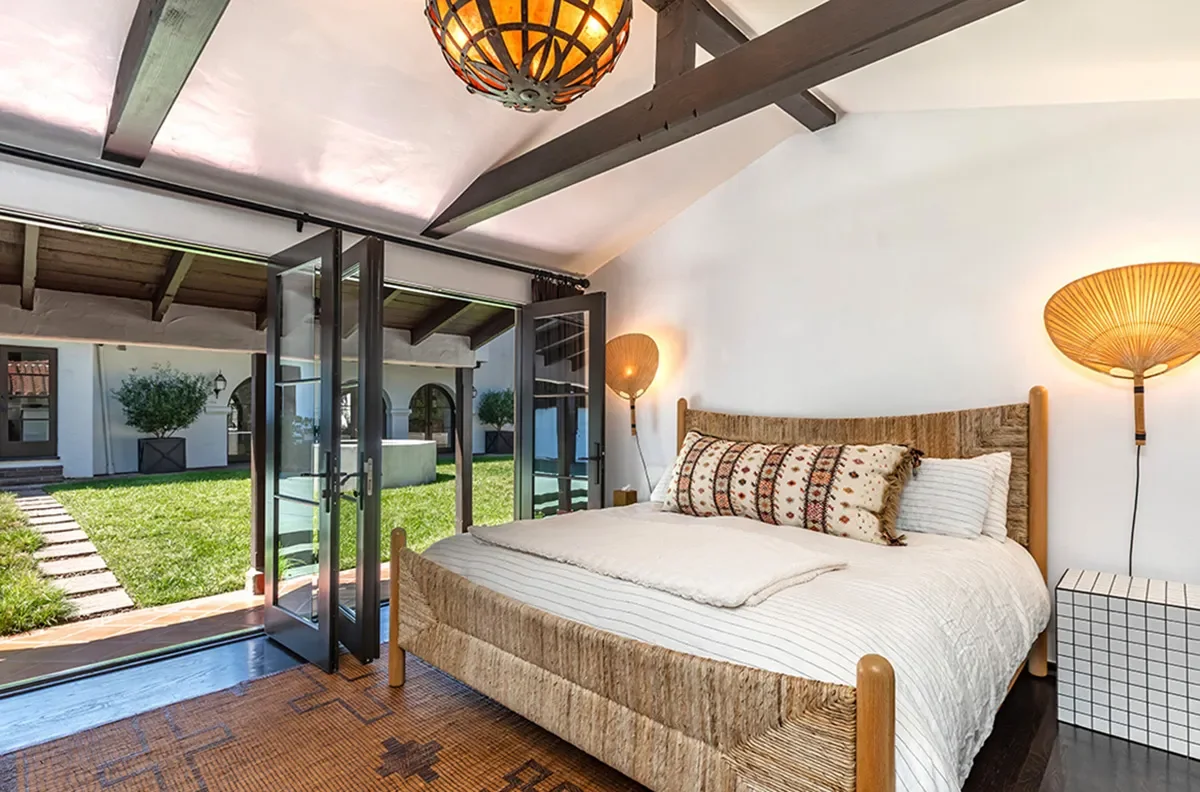
06 / The Courtyard Connection - The home is structured around a two-storey central courtyard complete with a fountain. Arched French doors in multiple rooms open directly onto it, dissolving the boundary between inside and outside — the true luxury of California living.
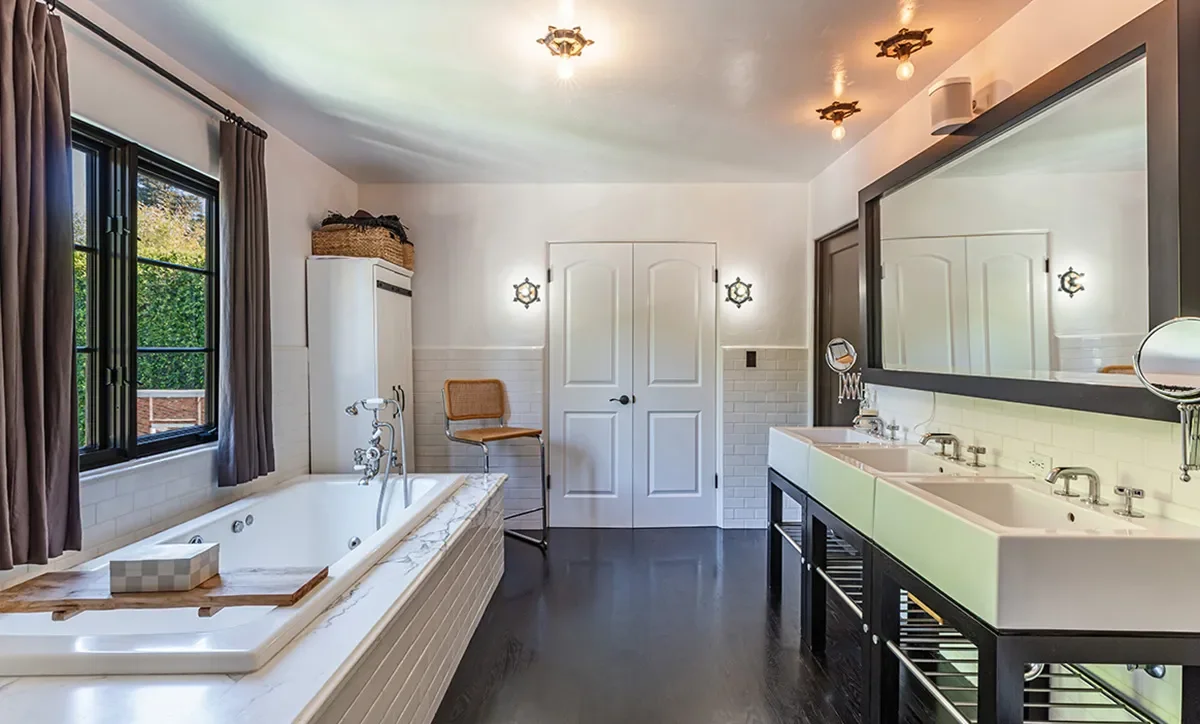
03 / Room by Room - What Each Space Teaches Us About Layered Living
The Entry Library - First Impressions, Reimagined. Most entry halls are transitional non-spaces — places you pass through to get somewhere else. Keaton refused that. By converting the foyer into a proper library with floor-to-ceiling bookshelves, ceramic pottery, and a sitting area, she created the most powerful possible introduction to her home. The message is immediate: this is a house for people who think, collect, and live with intention.
How to recreate it - If you have a generous hallway or entry space, consider a built-in bookcase along one wall with a small reading chair beneath a pendant light. Even a single wall of books communicates warmth and personality in a way that no piece of art can replicate. Add a few well-chosen objects — pottery, sculptural pieces, something handmade — to break the grid of the spines.
The Living Room - Scale & the Soaring Ceiling. The living room sits beneath exposed wood-beam ceilings and connects directly to the library, creating a sense of generous flow. One of five fireplaces in the home anchors the space, and the room draws natural light through steel-framed windows. The furniture reads as intentionally scaled down relative to the architecture — allowing the ceiling to be the star rather than competing with it.
How to recreate it - If you have high ceilings, resist the urge to fill vertical space — let it breathe. Choose warm, textured materials for upholstery: linen, worn leather, thick cotton. A fireplace, even a decorative one, creates a focal point that no television can. Layer rugs over terracotta or dark wood floors rather than replacing them with carpet.
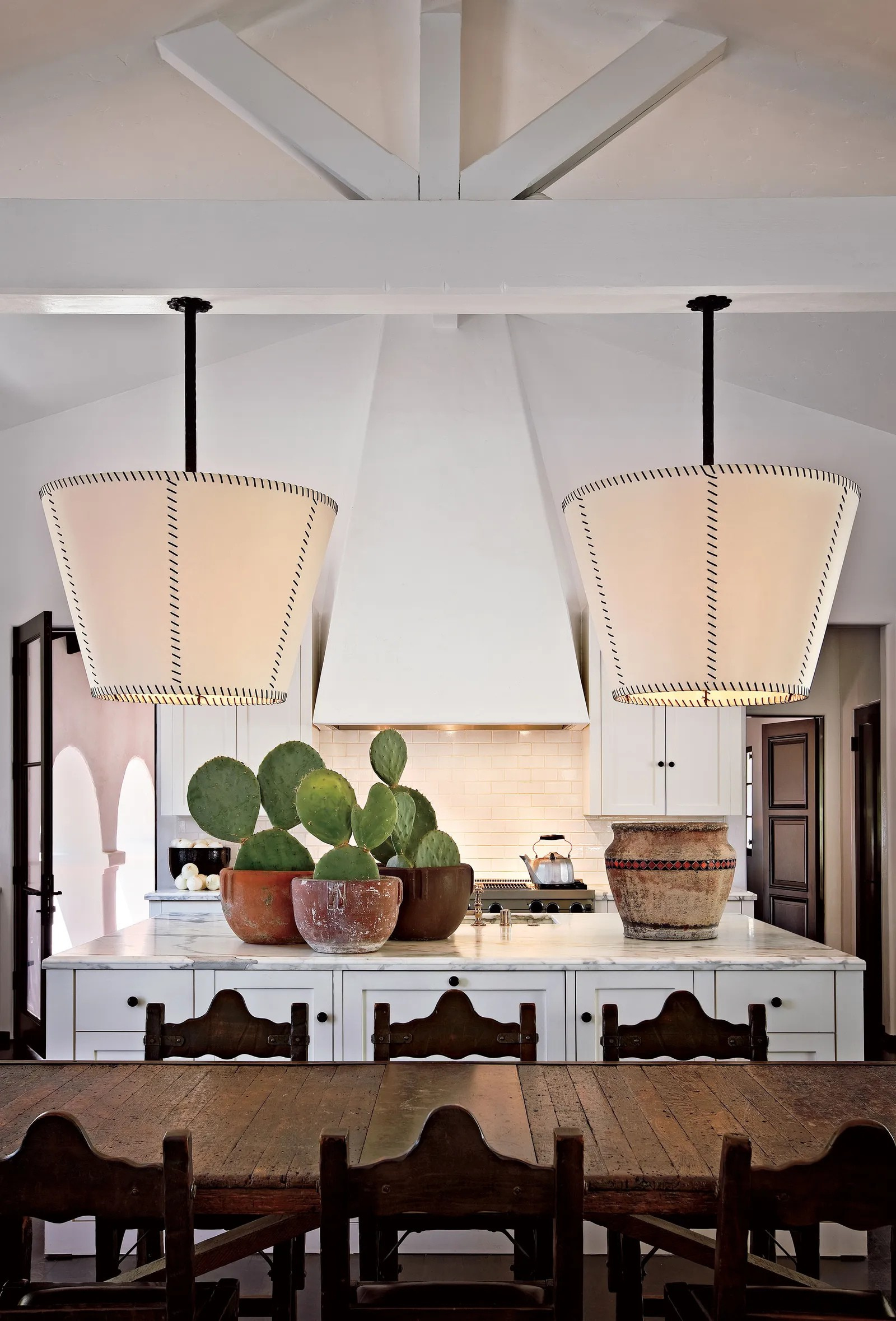
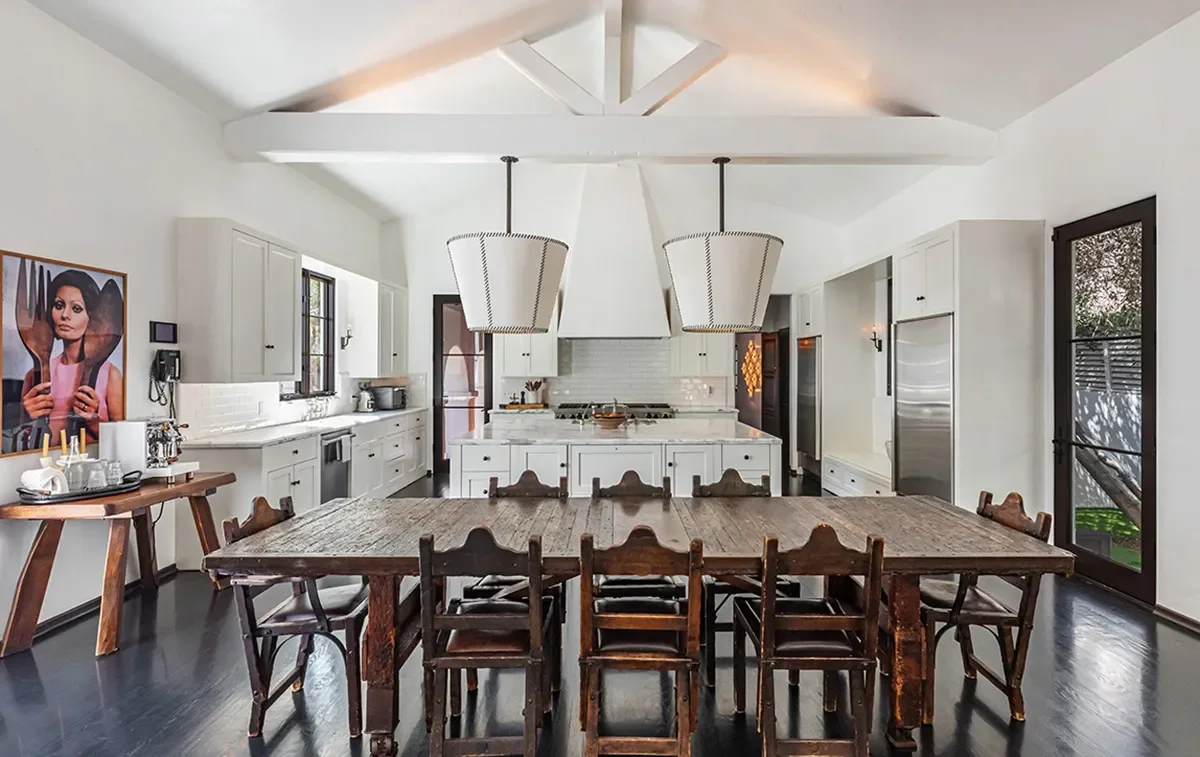
The Kitchen - Rustic Elegance with No Compromise. The kitchen blends what Keaton called an "elegant rural style" — functional but never without design sophistication. Open shelving, shaker-style cabinets, and hand-painted tile sit alongside a generous marble-topped island and considered stainless steel appliances. It's the anti-showroom kitchen: it looks like it has always been there, and it looks like someone actually cooks in it.
How to recreate it- Swap upper cabinets for open shelving on at least one run — it immediately makes a kitchen feel less like a fitted unit and more like a living space. Introduce hand-painted or handmade tiles as a backsplash: Zellige, hand-cut terracotta, or traditional Talavera all work beautifully. Choose un-lacquered brass or matte black hardware over chrome for an aged, collected feel.
The Courtyard - The Heart of the House. The two story central courtyard with its fountain is the architectural heart of the Flewelling house, and Keaton understood it immediately. Multiple rooms open directly onto it via arched French doors, making the courtyard not just an exterior feature but a central living space that unifies the entire home. Mosaic tile detailing and sculptural accessories at the entrance signal this zone's importance before you've even stepped through.
How to recreate it - Even without a courtyard, you can create the indoor-outdoor connection. Install French or crittall-style doors that open fully to a garden or terrace. Use consistent flooring materials — terracotta tile works indoors and outdoors — to blur the threshold. A water feature, even a small one, brings the acoustic element of a fountain: the sound of water is architecture's best-kept secret.
04 / Palette & Materials - The Restricted Palette That Makes Everything Work
One of the most instructive lessons from the Keaton house is the discipline of restriction. The interior material palette is deliberately limited to four core ingredients: white plaster, reclaimed wood, aged brick, and black steel. This sounds almost ascetic — but the result is anything but. By limiting the number of materials, each one is given space to be itself. The plaster wall becomes a study in light and shadow. The wood floor becomes something you notice and appreciate.
The colour palette follows the same logic. White and cream dominate, warming through terracotta and brick tones, grounded by the iron black of the steel frames and wrought ironwork. Nothing fights. Everything belongs.

Lime-washed plaster - Walls in white plaster with a slightly rough, imperfect finish — never smooth paint. The texture catches light differently throughout the day.
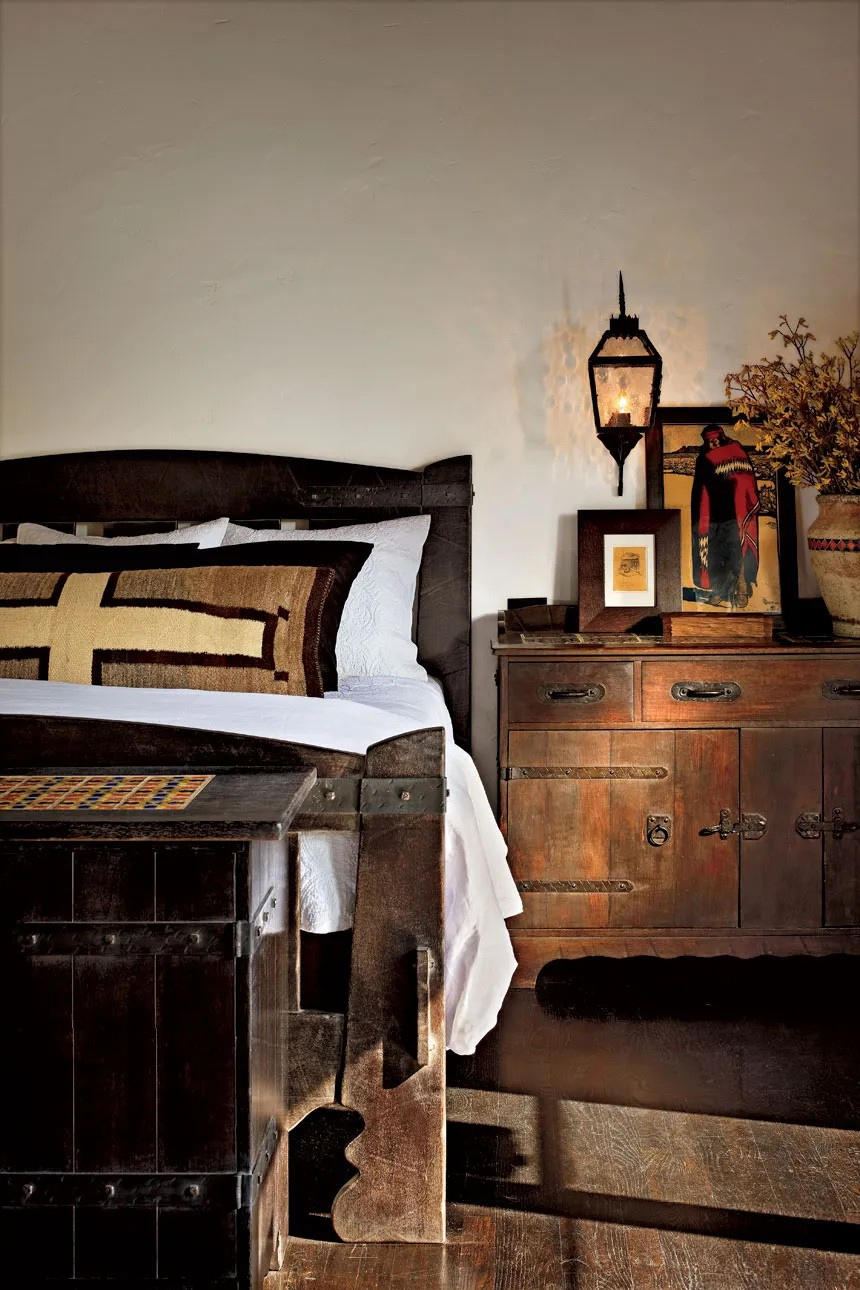
Reclaimed timber - Exposed beam ceilings and hardwood floors in aged, warm-toned wood. The graining and patina are the point — avoid anything that looks too new.
Hand-laid terracotta tile - Used on floors and as feature tile — irregular, slightly varied in tone, deeply warm. Zellige or encaustic cement tiles make an excellent contemporary equivalent.
Black steel - Window frames, door frames, and wrought-iron decorative details. The dark metal anchors the palette and adds industrial precision to an otherwise organic scheme.
Natural marble (restrained) - Used specifically on work surfaces — the kitchen island in marble, paired with humble shaker cabinetry. Luxury in one focused application, not everywhere.
Colourful mosaic - The one moment of colour — concentrated at the entrance as decorative tile work. Rich jewel-toned or Mediterranean mosaic patterns signal craft and history.
05 / The Philosophy - What We Can All Learn From How Keaton Lived
Keaton's design philosophy is perhaps best summarised in her own words: "My feeling is that you find an authentic house and, authentically, try to restore it." This isn't just a renovation approach — it's a worldview. It prioritises discovering what is genuine about a place over imposing something new onto it. It asks: what is this building trying to be, and how do I help it become that?
For the rest of us, working with existing homes rather than against them, the lesson is transferable. The quirky ceiling height, the awkward alcove, the old fireplace that "doesn't work" — these are not problems to be eliminated. They are the authentic features that give a home its character. Keaton would renovate around them, showcase them, make them the reason to love the house.
The other principle worth absorbing is the relationship between history and function. Keaton never restored for preservation's sake alone — the kitchen was reworked, the facade reimagined, 500 square feet added. But every intervention was in dialogue with the original architecture, not in competition with it. Contemporary living standards, honestly expressed through materials that were always part of the vocabulary: steel, plaster, tile.
At No15.Studio, this is the sensibility we return to again and again. Beautiful homes aren't designed from scratch — they're discovered, uncovered, and edited. They feel like they belong to where they are. And they look effortless precisely because every decision was made with care.
See more and explore what other designs are inspiring us
on our instagram @no15byhibner.